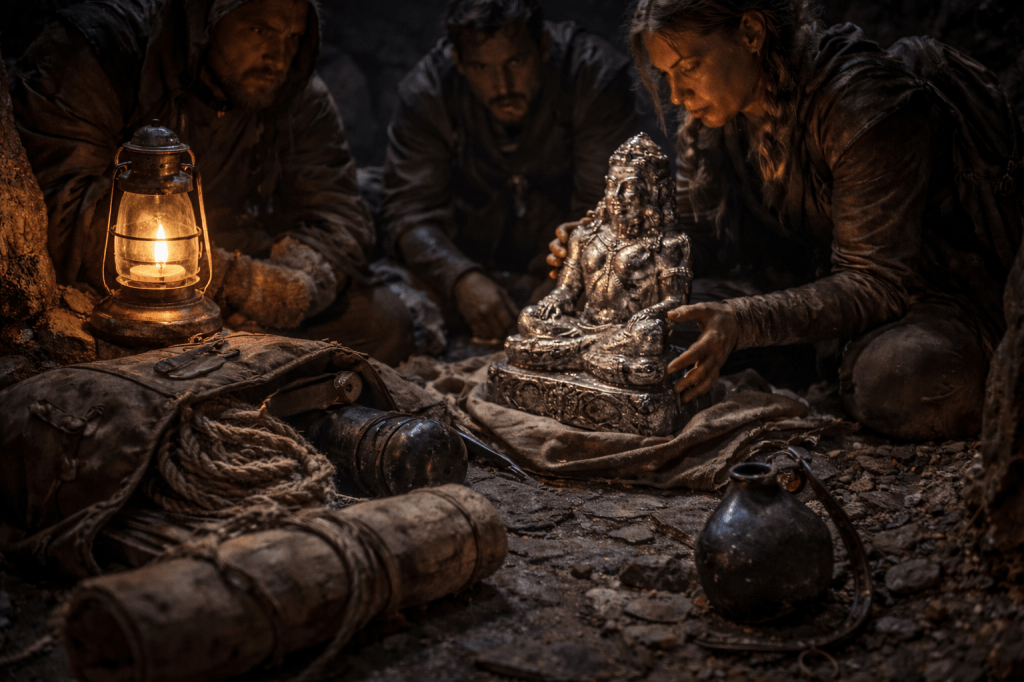
We found the silver idol three hours into the ruins. Heavy enough that it took both hands to lift, small enough that leaving it behind felt impossible.
Our packs were already full. Rope. Hammer. Spikes. Lantern oil. Two waterskins each. Food for the return trip. Bedrolls tied underneath. The idol meant something had to go.
We sat there in the dark for a long time, lantern turned low, trying to decide what was worth more: the treasure in our hands or the things that would get us home alive.
When distance, light, health, water, food, rope, carrying capacity, time, and equipment are concrete, players can plan, argue, improvise, and make tradeoffs.
A party with one torch left, two wounded members, and no room for treasure has a problem to solve.
Limitations create active play. Players stop asking “what can I roll?” and start asking:
Is the treasure worth the weight?
Can we carry this?
Should we leave something behind?
Can we get back before dark?
Do we need more water?
Can we afford another fight?
Tracking only matters when it creates interesting decisions.
The easiest way to kill those decisions is to remove the limits.
If the party can carry everything, food no longer matters. Water no longer matters. Rope becomes automatic. Torches become decoration. Treasure loses weight, literally and mechanically. A magical sack with infinite storage does more than solve a problem; it removes an entire category of play.
Without limits, preparation becomes flavor text.
The question is not whether players brought enough rope. The answer is always yes. The question is not whether they can carry the idol out. Of course they can. The question is not whether they risk another fight while wounded and low on supplies. They have enough of everything, so there is no real risk to weigh.
That is why carrying capacity matters. It turns preparation into decisions.
A pack full of food means less room for treasure. Heavy armor means slower travel and more rest. More rope means fewer spare weapons. More lantern oil means less water. Every choice closes off another.
That pressure is where the game lives.
The same is true for health. A party with full supplies but three wounded members plays differently than a fresh group. One more fight might be manageable, or it might mean limping home without enough food. One more climb might be possible, but not with the overloaded fighter carrying half the treasure.
Measured health changes behavior because it makes danger legible.
The same is true for distance and time. If the ruins are six hours from camp and the party has only four hours of light left, every room becomes a harder choice. Keep going or turn back? Search carefully or move fast? Take the safer route or risk the flooded passage?
The goal is not realism for its own sake. The goal is to create situations where players must make hard choices, argue over priorities, and live with the consequences.


Leave a Reply