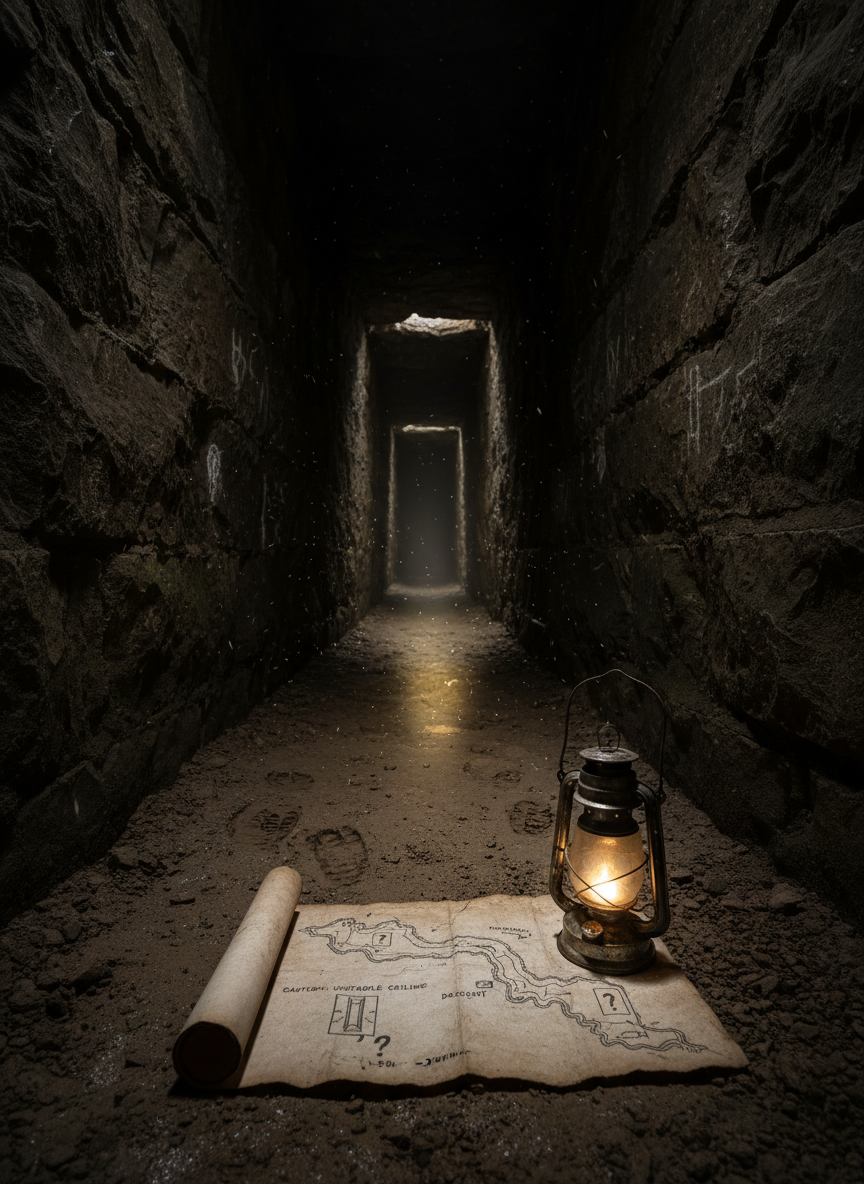
A narrow stone passage deep underground, photographed as if part of a natural history expedition. The camera faces down the corridor at eye level, where the rough, damp walls converge toward blackness. On the floor in the foreground rests a half-unrolled canvas map annotated with small, precise ink script: warnings, question marks, elevation notes. Beside it lies a metal lantern, its glass smudged, casting a harsh, directional beam that vanishes into dust and darkness. Tiny motes drift in the air, caught in the light. The photographic realism highlights slick rock textures, worn footprints, and faint chalk markings on the walls. The composition uses strong leading lines and deep shadows, building a claustrophobic, dangerous mood of exploration where every step is a meaningful, risky choice.

Field Notes

Why this blog haunts the margins of the map, and what we’re hunting here.

About

Notes From The Threshold

Out here, the map ends before the questions do. This journal follows how we build risk, wonder, and hard choices into every tabletop journey.
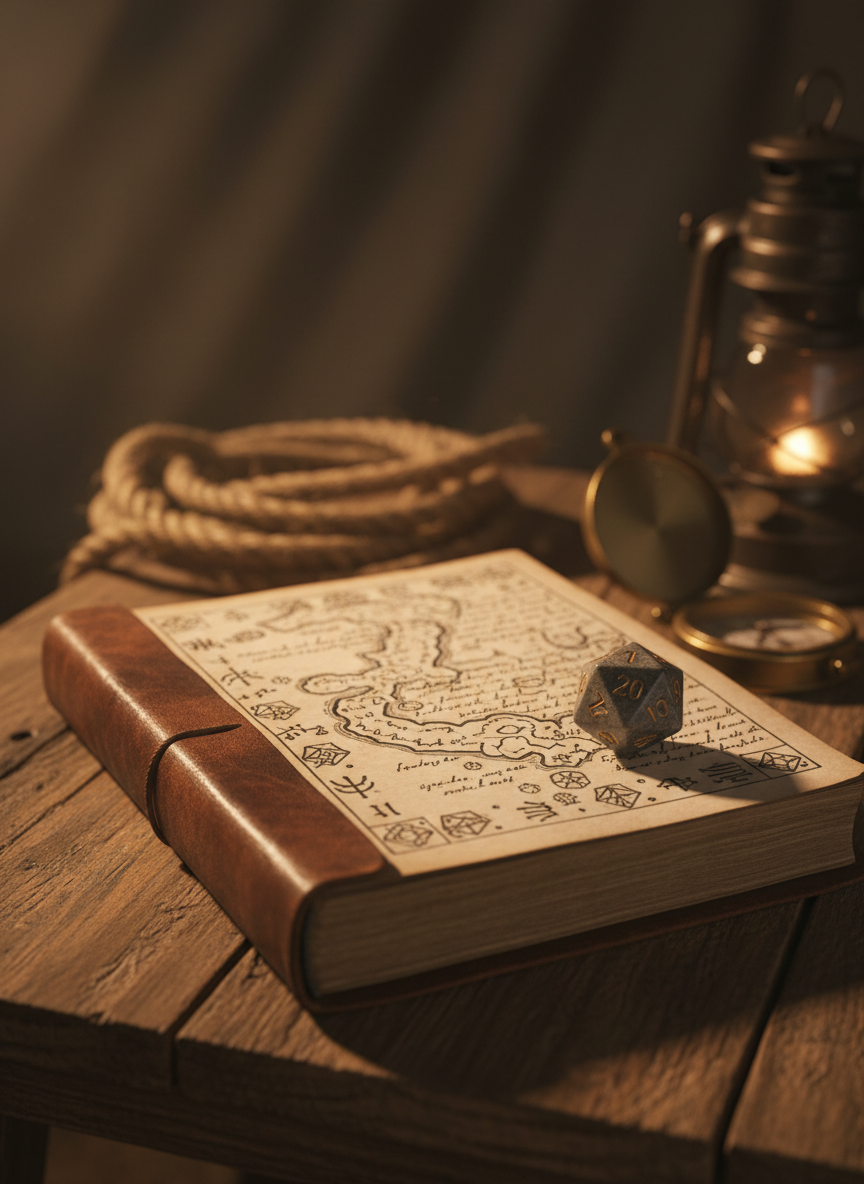
A weathered leather-bound journal half-open on a rough-hewn wooden table, its pages crowded with tiny ink notes, hastily sketched dungeon maps, and margin symbols resembling arcane dice. Beside it lies a single twenty-sided die carved from dark stone, numbers etched in tarnished gold, stopped on the edge between 1 and 20. The scene sits in a dimly lit camp tent; blurred in the background are coiled rope, a brass compass, and a hooded lantern. Moody, directional firelight from the left throws deep shadows and a warm, flickering glow across the journal’s texture. Photographic realism with a cinematic, eye-level composition and shallow depth of field creates a tense, contemplative atmosphere of risk and decision just before the roll.
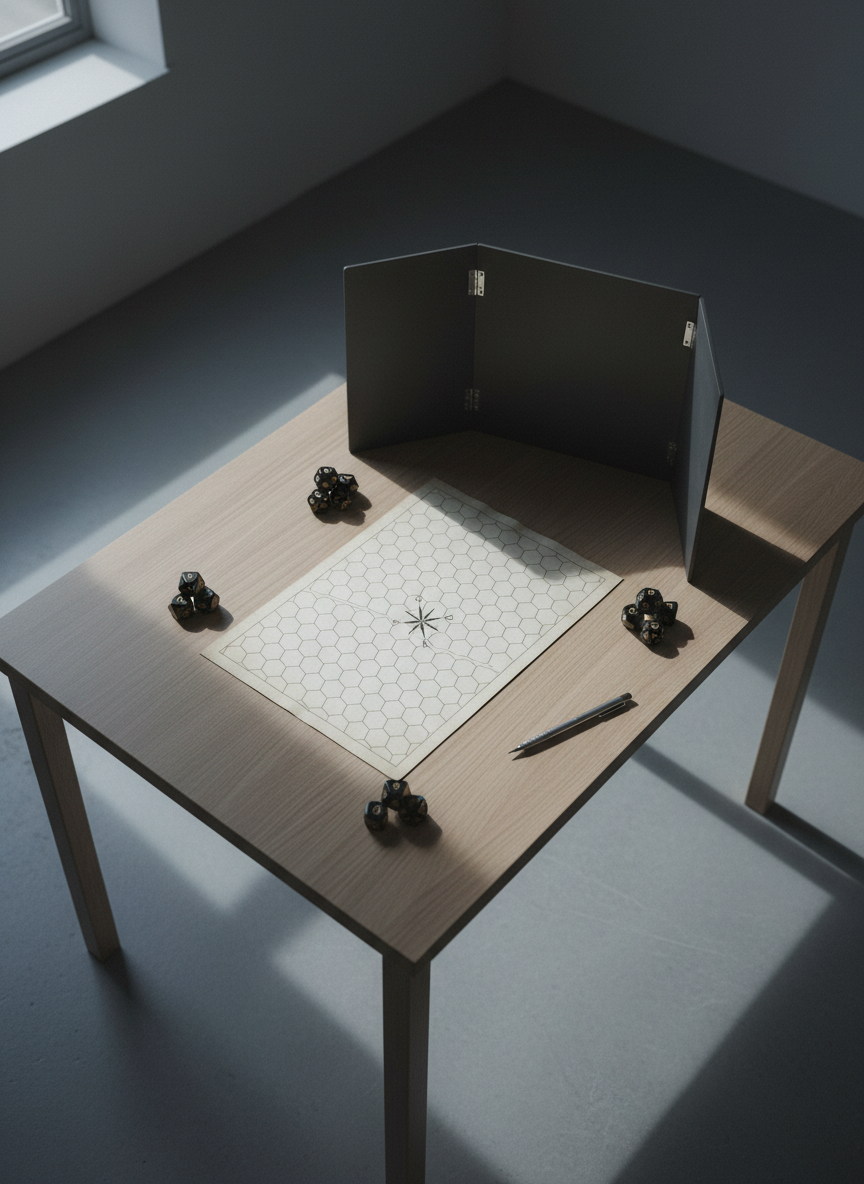
An overhead view of a minimalist wooden tabletop prepared for a tabletop RPG session, but strangely absent of players. At the center lies a pristine blank hex map, its pale parchment surface unmarred except for a single inky compass rose. Scattered around are neatly stacked polyhedral dice of obsidian-black resin, a closed GM screen of matte charcoal board, and a solitary mechanical pencil aligned precisely. The room is dim, illuminated only by cool, diffused window light that falls diagonally, carving understated shadows and pools of soft gray. The photographic realism emphasizes clean lines and empty negative space, evoking a hushed, anticipatory mood as if the world is waiting to be born from exploration, danger, and the first uncertain notes in a field journal.
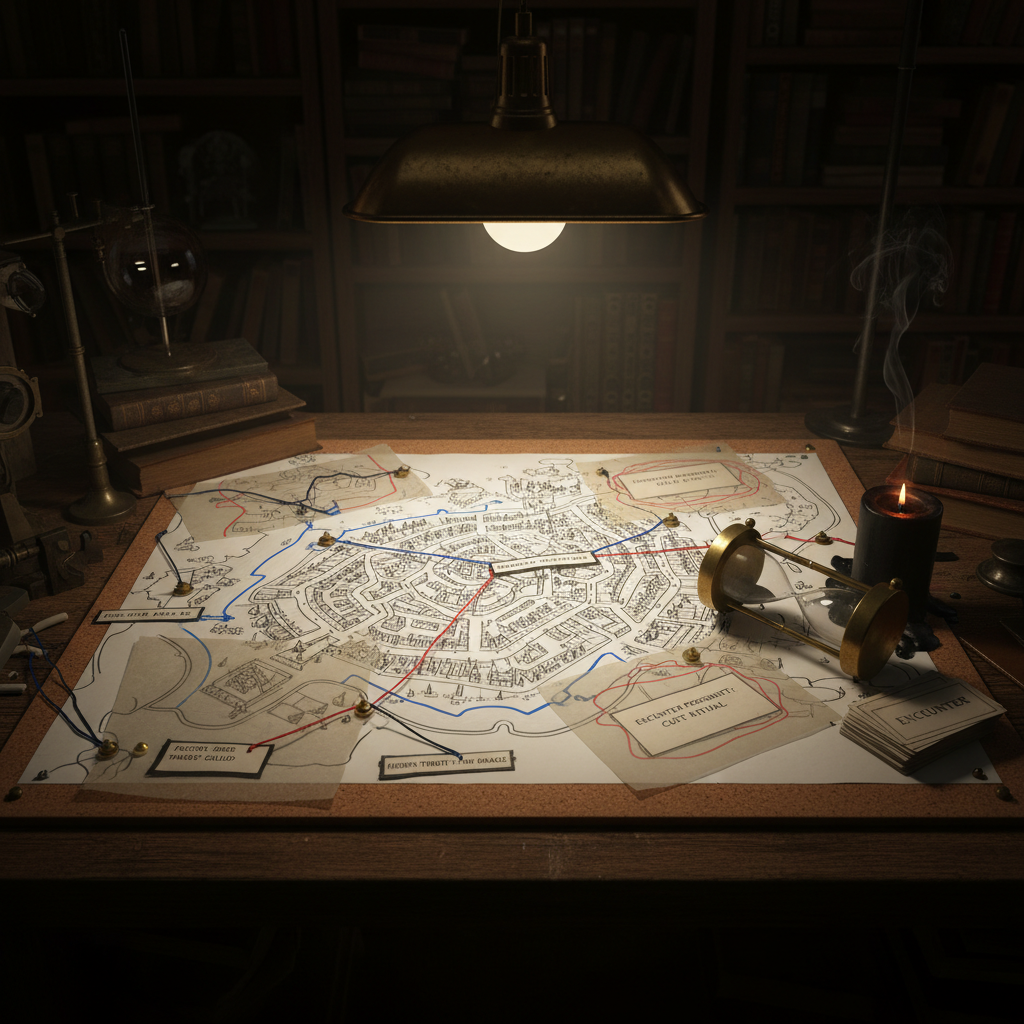
A cluttered workbench in a dim study, captured in photographic realism from a slightly elevated angle. At the center, a detailed hand-drawn city map is pinned to a corkboard surface, layered with translucent vellum overlays that show alternate street layouts and encounter possibilities. Colored string connects pushpins marking factions, rumors, and hidden threats. Nearby, a brass hourglass nearly run out, a slowly guttering black candle, and a small pile of unused encounter cards hint at time pressure and uncertainty. A single desk lamp with a narrow metal shade casts stark, focused light, leaving the edges of the room to dissolve into darkness. The overall composition emphasizes depth and asymmetry, evoking a dark, analytical mood of worldbuilding as methodical fieldwork in a dangerous urban environment.
A narrow stone passage deep underground, photographed as if part of a natural history expedition. The camera faces down the corridor at eye level, where the rough, damp walls converge toward blackness. On the floor in the foreground rests a half-unrolled canvas map annotated with small, precise ink script: warnings, question marks, elevation notes. Beside it lies a metal lantern, its glass smudged, casting a harsh, directional beam that vanishes into dust and darkness. Tiny motes drift in the air, caught in the light. The photographic realism highlights slick rock textures, worn footprints, and faint chalk markings on the walls. The composition uses strong leading lines and deep shadows, building a claustrophobic, dangerous mood of exploration where every step is a meaningful, risky choice.

Reviews

A weathered leather-bound journal half-open on a rough-hewn wooden table, its pages crowded with tiny ink notes, hastily sketched dungeon maps, and margin symbols resembling arcane dice. Beside it lies a single twenty-sided die carved from dark stone, numbers etched in tarnished gold, stopped on the edge between 1 and 20. The scene sits in a dimly lit camp tent; blurred in the background are coiled rope, a brass compass, and a hooded lantern. Moody, directional firelight from the left throws deep shadows and a warm, flickering glow across the journal’s texture. Photographic realism with a cinematic, eye-level composition and shallow depth of field creates a tense, contemplative atmosphere of risk and decision just before the roll.

Aya Nakamura

“Every post feels like a field report from another world, packed with usable tools for my campaigns.”

An overhead view of a minimalist wooden tabletop prepared for a tabletop RPG session, but strangely absent of players. At the center lies a pristine blank hex map, its pale parchment surface unmarred except for a single inky compass rose. Scattered around are neatly stacked polyhedral dice of obsidian-black resin, a closed GM screen of matte charcoal board, and a solitary mechanical pencil aligned precisely. The room is dim, illuminated only by cool, diffused window light that falls diagonally, carving understated shadows and pools of soft gray. The photographic realism emphasizes clean lines and empty negative space, evoking a hushed, anticipatory mood as if the world is waiting to be born from exploration, danger, and the first uncertain notes in a field journal.

Mateo García

“Before the Roll taught me to design dungeons as stories of risk, not just puzzles and monsters.”